

If you’re going through menopause and finding it harder to maintain strength, energy and confidence in your body, there’s some encouraging news.
A 2024 study from the University of the Bundeswehr Munich, published in the journal Frontiers in Public Health, found that just 10 minutes of bodyweight resistance exercise, performed five days per week, helped previously inactive women increase their muscle mass in only 12 weeks.
Why does this matter during menopause?
From our 40s onwards, women naturally begin to lose muscle mass, and this process often accelerates during and after menopause due to hormonal changes. Less muscle can mean reduced strength, lower metabolism, poorer balance and a greater risk of falls.
The good news is that building and maintaining muscle doesn’t necessarily require a gym membership, expensive equipment or hours of training.
What the Study Found
Researchers followed 30 female university employees with predominantly desk-based jobs who were not regularly strength training.
One group completed 10-minute “resistance exercise snacks” during the working day, five days per week, for 12 weeks. The exercises included movements such as squats, lunges, wall sits, push-ups and standing leg raises using only body weight. Participants worked continuously through the exercises, performing as many quality repetitions as possible within the allocated time.
The results were impressive:
- The exercise group gained an average of 0.42 kg of muscle.
- The control group lost muscle over the same period.
- Strength measures showed positive improvements, particularly in core and upper-body strength.
- Participants achieved high adherence and most intended to continue exercising after the study ended.
Why 10 Minutes Can Be Effective
Many women believe they need heavy weights to build muscle. While traditional strength training remains highly effective, this study demonstrates that consistent effort matters too.
When muscles are challenged close to fatigue – even using body weight – they receive a signal to adapt and become stronger. Performing short sessions regularly throughout the week may help stimulate muscle-building processes more frequently, creating meaningful results over time.
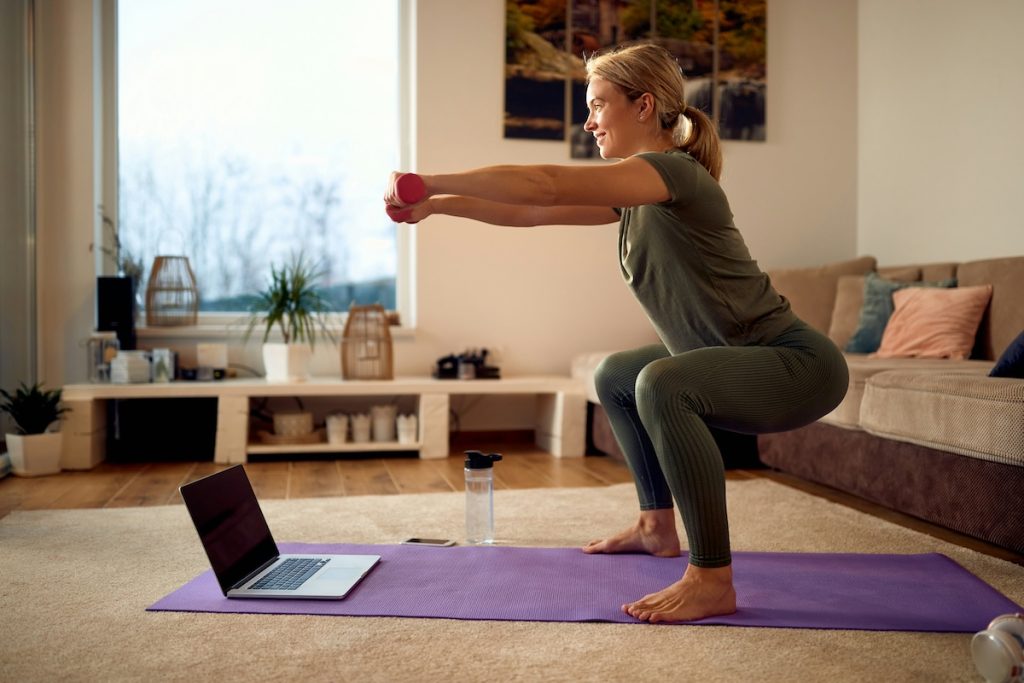
Your Menopause Muscle Plan
Start with 10 minutes, five days per week.
Perform each exercise for 45–60 seconds with good technique:
- Squats or sit-to-stands from a chair
- Wall push-ups
- Alternating lunges or supported split squats
- Glute bridges
- Standing knee raises
- Plank or wall plank
Move directly between exercises and aim to complete as many quality repetitions as you can safely manage.
The secret? That “as many reps as possible with good form” part. Don’t just go through the motions like you’re checking a box. Make it hard. Feel the burn. Give yourself something to actually adapt to.
The Takeaway
This study matters because it removes the excuses.
Can’t afford a gym? Don’t need one.
Don’t have time? It’s literally 10 minutes.
Don’t know how to use equipment? Bodyweight only.
Intimidated by the weight room? Your bedroom works fine.
But here’s the real reason I’m excited about this: every single person in the study who finished it said they’d keep doing it afterward. That’s basically unheard of in fitness research. Programs with perfect adherence rates don’t exist.
Except this one does.
You know why? Because it’s actually doable. It doesn’t require you to become a different person. It doesn’t demand two hours you don’t have. It just asks for 10 minutes and some effort.
You don’t need perfect conditions to start.
You need a small amount of time, a little space and a commitment to show up regularly.
Menopause is a critical time to prioritise muscle health. While longer, progressive strength-training programmes remain the gold standard, this research shows that even 10 minutes of consistent resistance exercise can make a measurable difference.
We can all find 10 minutes, right? Ten minutes today could be the beginning of a stronger, healthier future. Not magic, just science.
Try it for two weeks and see what happens. Then tell me if you still think you don’t have time.
Want to try this? Reply and let’s talk about how to make this work for your schedule – or how to level it up if you’re ready for more.